
Machine connections and waste gas removal
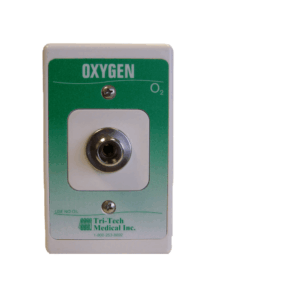
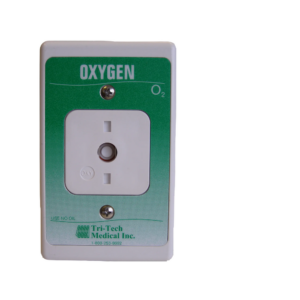
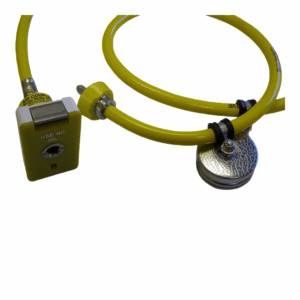
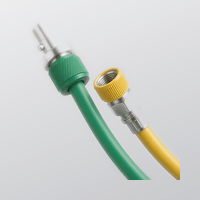
On the supply side, a gas-specific hose runs from a DISS or quick-connect outlet to the machine, and our hose assemblies are made in custom lengths with those end fittings. Oxygen is the gas every anesthesia setup draws, while nitrous oxide and medical air outlets matter where the workstation meters those gases too. On the return side, WAGD outlets and vacuum support active scavenging, and passive setups capture exhaust in a charcoal filter at the machine. Scavenger interfaces, charcoal filters, and evacuation tubing make up our anesthesia gas evacuation range.
Medical Gas Glossary & Definitions
When selecting medical gas equipment for veterinary facilities, buyers should prioritize systems that deliver reliable oxygen, medical air, vacuum, and waste gas evacuation while meeting NFPA 99 and ISO 9170-1 standards. Key considerations include compatibility with existing pipelines, real-time monitoring capabilities, ease of maintenance, and scalability for anesthesia, respiratory support, and emergency backup needs in animal healthcare settings.
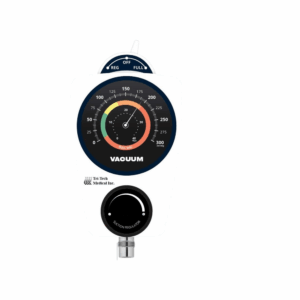
Properly configured gas outlets, manifolds, alarms, compressors, pumps, valve boxes, hose assemblies, flow meters, and suction regulators help maintain gas purity, pressure stability, and leak prevention, supporting both patient safety and clinic workflow efficiency.
Key Components and Their Functions
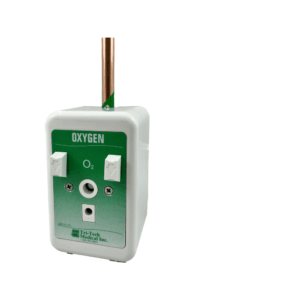
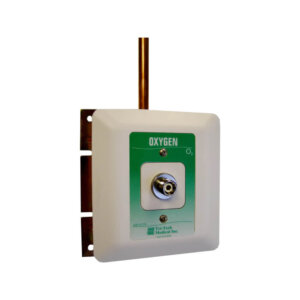
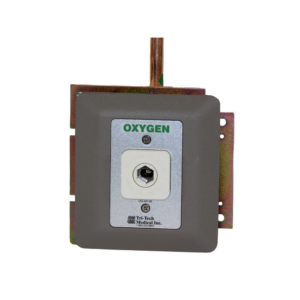
Gas Outlets
Provide quick-connect access points for oxygen, medical air, vacuum, and other gases at point-of-care locations throughout the facility.
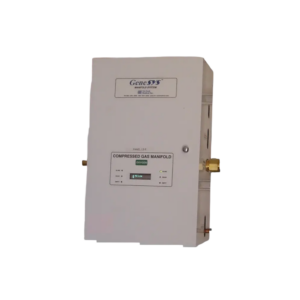
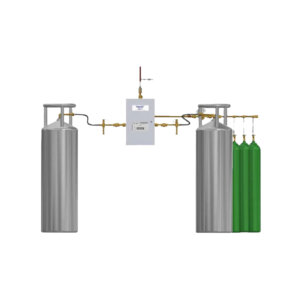
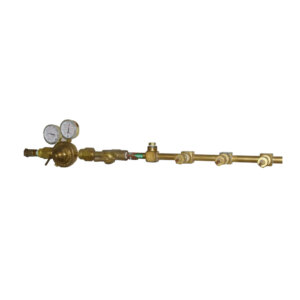
Manifolds
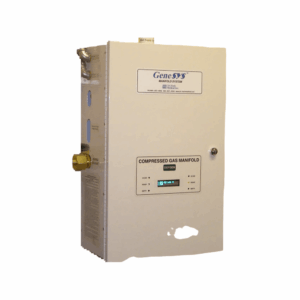
Automatically switch between primary and secondary cylinder banks to ensure continuous gas supply without interruption during procedures.
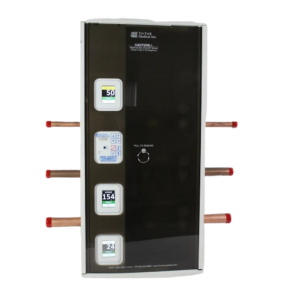
Alarm Boxes
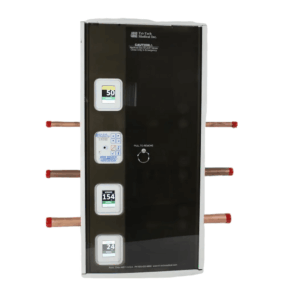
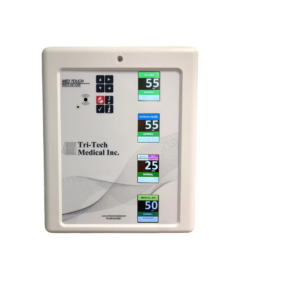
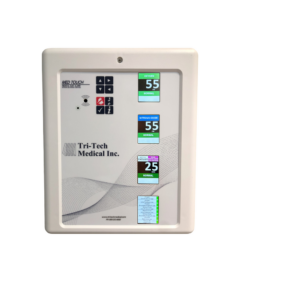
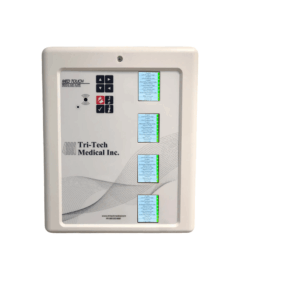
Monitor pressure, purity, and flow in real time, triggering audible and visual alerts when parameters fall outside safe ranges.
Compressors & Pumps
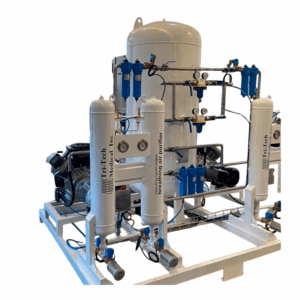
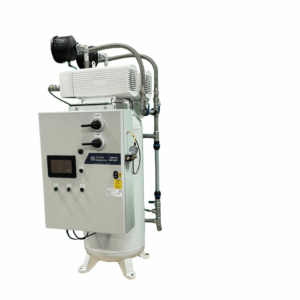
Generate medical air and vacuum on demand, supplying clean, dry gas or suction to multiple outlets while meeting purity requirements.
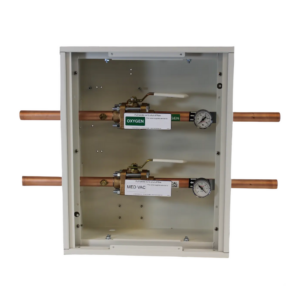
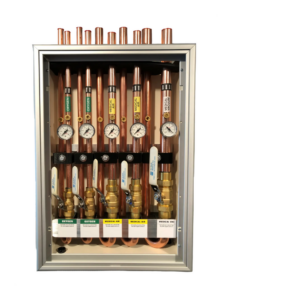
Zone Valve Boxes
Allow isolation of specific facility zones for maintenance or emergencies without shutting down the entire gas system.
Air Flow Meters & Suction Regulators
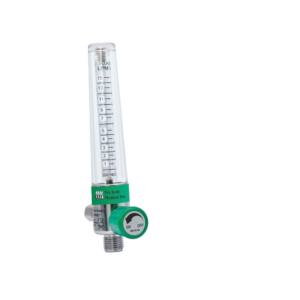
Deliver precise control of gas flow rates and suction levels, enabling accurate delivery during anesthesia and respiratory support.
Key Hose, Fitting, and Connection Definitions
- DISS: Diameter Index Safety System; a standardized, non-interchangeable connector that prevents incorrect gas line connections.
- Quick-connect outlet: Wall or ceiling fitting allowing rapid, tool-free attachment of hoses to the central pipeline.
- Color-coded hose: Flexible tubing marked by industry-standard colors (green for oxygen, yellow for medical air, white for vacuum) to reduce mix-up risk.
- Manifold: Automatic switching device that draws from primary and reserve cylinder banks to maintain uninterrupted supply.
- Zone valve box: Enclosed shut-off assembly that isolates a section of the facility for maintenance or emergency response.
- Alarm panel: Electronic monitor that continuously checks pressure, purity, and flow, activating alerts on deviation from safe parameters.
- Male vs Female connectors: Male fittings feature a protruding end that inserts into the receiving female fitting; proper pairing ensures leak-free, gas-specific connections.
- Gas types: Common veterinary medical gases include oxygen for respiratory support, medical air for breathing circuits, vacuum for suction, carbon dioxide for insufflation, nitrous oxide for anesthesia, nitrogen for tool power, WAGD for waste anesthetic gas disposal, and ISO air for instrument drive.
- Hand tighten, barb, check valve, hex nut, quick connect: Hand-tighten fittings secure by hand; barb ends grip hose interiors; check valves prevent reverse flow; hex nuts provide wrench-tight security; quick-connect mechanisms allow instant, tool-free attachment.
- DISS vs NPT: DISS uses indexed, gas-specific diameters for safety; NPT relies on tapered pipe threads that are interchangeable but require additional indexing to avoid cross-connection errors.
- Conductive vs non-conductive hose: Conductive hoses dissipate static electricity for flammable gas safety; non-conductive hoses are used where static is not a concern and electrical isolation is preferred.
- Color codes: NFPA 99 standards assign green to oxygen, yellow to medical air, white to vacuum, blue to nitrous oxide, gray to nitrogen, and brown to carbon dioxide for instant visual identification.
- Brands: Common outlet and fitting brands include DISS, Ohmeda, Chemetron, Puritan-Bennett, Oxequip, Schrader, and Medstar, each offering unique indexing and connection styles for veterinary pipeline compatibility.
Medical Gas Hose Assemblies and Adapters
Custom hose assemblies and adapters connect equipment to outlets while maintaining gas integrity and color-coded identification.
- Flexible, color-coded hoses for oxygen, air, vacuum, and waste gases
- Quick-connect fittings compatible with DISS, Ohmeda, Chemetron, and Puritan Bennett outlets
- Custom lengths and configurations for anesthesia machines, ventilators, and wall outlets
Explore additional technical resources, installation guidelines, and compliance documentation in the resource library above.