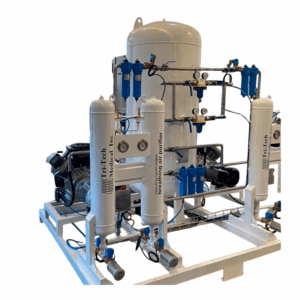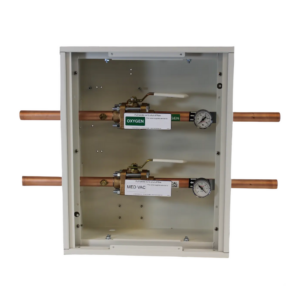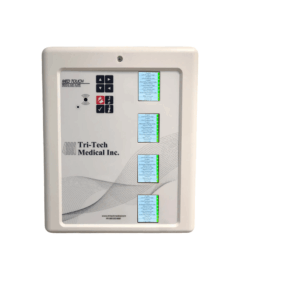
Infinium Veterinary provides advanced medical vacuum systems tailored for veterinary practices, featuring oil-lubricated rotary vane and dry rotary claw technologies. These completely packaged systems are engineered to generate consistent negative pressure, essential for suction and aspiration tasks in animal health settings. Built to meet rigorous standards, they offer dependable operation in veterinary clinics and hospitals, facilitating procedures that demand precise vacuum control and reliability to enhance patient outcomes and operational efficiency.
Advantages
These medical vacuum systems deliver key benefits for veterinary professionals, such as the highest vacuum levels among systems for demanding applications, low heat and sound output to maintain a calm environment around animals, and energy-efficient designs that reduce operational costs. Their ease of installation with minimal field connections simplifies setup in busy veterinary facilities, while built-in alarms and controls ensure safety and quick response to issues. The robust construction and minimal maintenance requirements provide long-term reliability, allowing veterinarians to focus on animal care rather than equipment upkeep, ultimately offering excellent value for high-volume practices handling companion animals, livestock, or exotic species.Key Features
- Made in the U.S.A. with compliance to NFPA 99 and NEC requirements for safe veterinary use.
- Highest vacuum level capabilities, achieving up to 19 inHg (64.3 kPa) for precise suction in animal procedures.
- Low heat and low sound operation, promoting a stress-free environment in veterinary hospitals.
- UL listed electrical control panel with audible and visual alarms, dry contacts for remote monitoring, and programmable logic controller for automatic alternation and lead-lag control.
- ASME construction rated receiver tank equipped with vacuum gauge, valved by-pass, and manual drain for reliable performance.
- Designed for ease of installation with single-point inlet, exhaust per pump, and power connection.
- Completely tested prior to shipment to ensure quality and readiness for veterinary applications.
- Available in various configurations including duplex, triplex, horizontal tankmount, vertical tankmount, and stackmount for flexibility in clinic layouts.
- Options for enhanced monitoring such as Level 1 or Level 2 HMI touch screens, BacNet gateway, Variable Frequency Drive (VFD), and oxygen-assured features.
- Oil-lubricated rotary vane models include four-stage oil separation removing 99.9%+ oil and smoke particles, with non-asbestos vanes lasting minimum 40,000 hours.
- Dry rotary claw models offer oil-free, frictionless operation with lowest maintenance, suitable for waste anesthesia gas disposal (WAGD) in veterinary settings.
Vacuum Pump Types
Oil Lubricated Rotary Vane Medical Vacuum Pumps
This pump utilizes oil lubrication in its rotary vane mechanism to generate negative pressure for medical suction applications, such as removing fluids from patients during procedures. It operates continuously as an air-cooled, direct-driven system, ensuring reliability in healthcare settings. Key features include compliance with NFPA 99 and NEC standards, integration into packaged systems with ASME coded receiver tanks, and ease of installation with minimal field connections. Maintenance involves oil changes, and it is guaranteed for 36 months against defects. It supports applications like mucus removal and surgical assistance, with capacities calculable via referenced specification sheets. What makes it unique is its durable design with four-stage oil separation removing over 99.9% of oil and smoke, non-asbestos vanes lasting up to 40,000 hours, and energy-efficient operation suitable for both medical and veterinary environments.
Oil-Less Dry Rotary Claw Medical Vacuum Pumps
Employing oilless dry rotary claw technology, this pump creates a vacuum without oil, reducing contamination risks in medical environments. It is designed for continuous duty, air-cooled operation and meets strict quality standards including NFPA 99 and NEC requirements. Unique aspects include dry operation for cleaner performance, inclusion in fully packaged systems with HMI touch screen controls and alarms, and pre-shipment testing. Applications focus on hospital suction needs like wound fluid drainage and waste anesthesia gas disposal. Maintenance is minimized due to no oil requirements, with a 36-month warranty, low heat and noise for patient comfort, and capacity calculations detailed in associated downloads.
Oil-Less Dry Rotary Vane Medical Vacuum Pumps
This oilless dry rotary vane pump generates vacuum through a vane mechanism without oil lubrication, promoting hygiene and reliability in medical vacuum systems. It features air-cooled, direct-driven continuous operation and adheres to NFPA 99 and NEC standards. Distinctive elements include dry technology for reduced maintenance, packaging with ASME tanks, audible/visual alarms, and simple installation. It is used for procedures involving fluid removal from airways or surgical support. No oil maintenance is required, offering efficiency in clean environments, with a 36-month guarantee; system capacities can be determined using provided specification resources.
Oil Lubricated Rotary Vane Tankmount Medical Vacuum Pumps
A tankmount configuration of the oil-lubricated rotary vane pump, it integrates a receiver tank for vacuum storage and release in medical settings. Powered by electricity, it operates as a stationary, continuous-duty unit with direct drive and air cooling. It complies with healthcare standards like NFPA 99, includes enclosed control panels, and features easy interconnecting piping. Maintenance includes oil lubrication, suitable for high-demand applications such as patient care suction. Uniqueness lies in the tankmount design for compact installation, with 18-month system and 36-month pump warranties; capacity calculations are available in downloads.
Oil-Less Dry Rotary Vane Tankmount Medical Vacuum Pumps
This tankmount variant uses oilless dry rotary vane technology to provide vacuum in a self-contained system with an integrated tank. It ensures oilless operation for medical purity, with air-cooled continuous duty and compliance to NEC and NFPA 99. Features encompass HMI controls, alarms, and pre-tested packaging for quick setup. Ideal for draining fluids or airway management in hospitals, it minimizes maintenance through dry design. The tankmount setup enhances space efficiency, backed by 36-month warranty; medical vacuum system capacities are calculable per specification sheets.
Oil-Less Dry Rotary Claw Tank-Over Stackmount Medical Vacuum Pumps
Featuring oilless dry rotary claw technology in a tank-over stackmount arrangement, this pump stacks the tank above the pump for vertical space savings in medical facilities. It delivers dry, oil-free vacuum generation, operating continuously and air-cooled while meeting quality standards like NFPA 99. Unique stackmount design facilitates installation, with included wiring, alarms, and ASME tanks. Applications include surgical suction and fluid removal, emphasizing low-maintenance dry operation. Efficiency in compact layouts is a key benefit, with warranties of 18 months for the system and 36 months for the pump; capacity for vacuum systems is addressed in related materials.
Veterinary Applications
Based on industry sources and manufacturer details, the most popular types of medical vacuum pumps are rotary vane (both oil-lubricated and oil-less variants) and dry rotary claw pumps, due to their reliability, compliance with standards like NFPA 99, and balance of performance and maintenance needs. These are commonly configured in duplex or triplex setups for redundancy, with tankmount (horizontal or vertical) and stackmount arrangements favored for space efficiency. Modular or side-by-side modules are also widespread for scalability.
For veterinary facilities specifically, dry rotary claw pumps in oil-less configurations are particularly popular for low maintenance, frictionless operation, and suitability for waste anesthesia gas disposal (WAGD) to minimize contamination. Oil-lubricated rotary vane pumps are common for high vacuum levels (up to 19 inHg) and durability in high-volume practices, but dry claw models are preferred for quieter, lower-heat operation. Veterinary setups often prioritize stackmount or vertical tankmount configurations for compact layouts, with features like variable frequency drives and touch-screen controls.