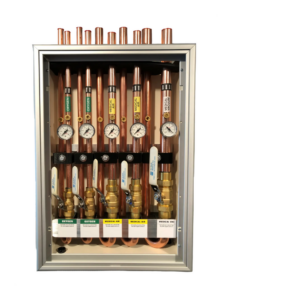
The Medical Gas Horizontal Zone Valve Box is an essential component for managing medical gas distribution systems in veterinary practices. It allows for precise control and shutoff of gas flows to specific zones, ensuring safety and compliance with regulatory standards. Ideal for environments where multiple gases like oxygen, nitrous oxide, and medical air are used, this box supports the demanding needs of animal health professionals by offering robust construction and easy accessibility.
Advantages
Opting for this zone valve box brings several key benefits to your veterinary setup. Its horizontal design optimizes space in compact areas, allowing for easier installation and maintenance without compromising on functionality. Built with durability in mind, it minimizes downtime and reduces the risk of gas leaks, contributing to a safer working environment. Additionally, the inclusion of clear labeling and gauge options facilitates quick monitoring and response, which is crucial during emergency veterinary procedures. This results in improved workflow efficiency and cost savings over time through reliable performance and reduced maintenance needs.Features
- Horizontal configuration for space-efficient installation in veterinary facilities
- Supports multiple medical gases including oxygen, nitrous oxide, and vacuum
- Lockable doors for security and compliance with safety standards
- Integrated gauges for real-time pressure monitoring
- Constructed from high-quality materials for long-term durability
- Easy-to-access valves for quick shutoff in emergencies
- Customizable valve counts to suit specific practice needs