Fast Relief of Respiratory Distress in a User Friendly System
- Companion animal support
- Allows patients to comfortably eat, interact, and sleep
- Lowers respiration rate, improves secretion clearance and reduces work of breathing
- Helps avoid intubation and may reduce ICU admissions
- Fully integrated system is easy to set-up and operate
- Safety alarms to warn of therapy disruptions
Veterinary / Animal Interfaces
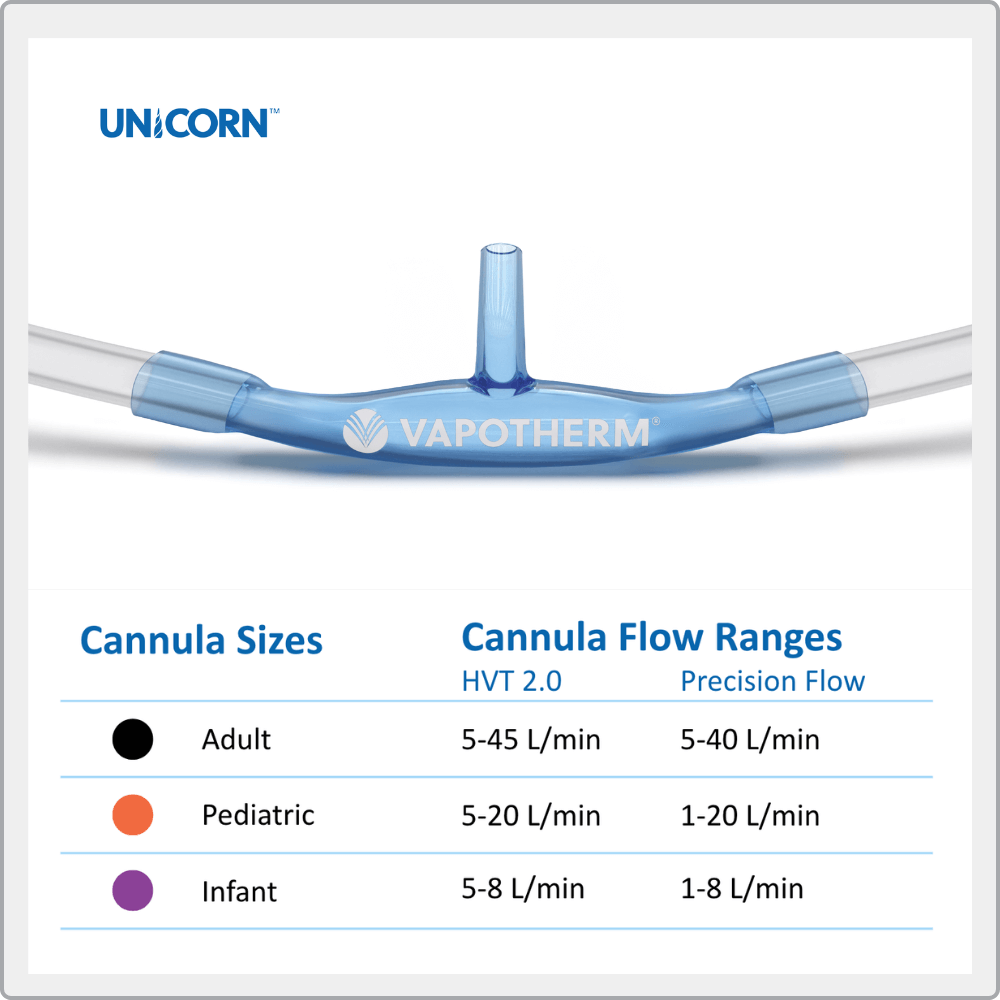
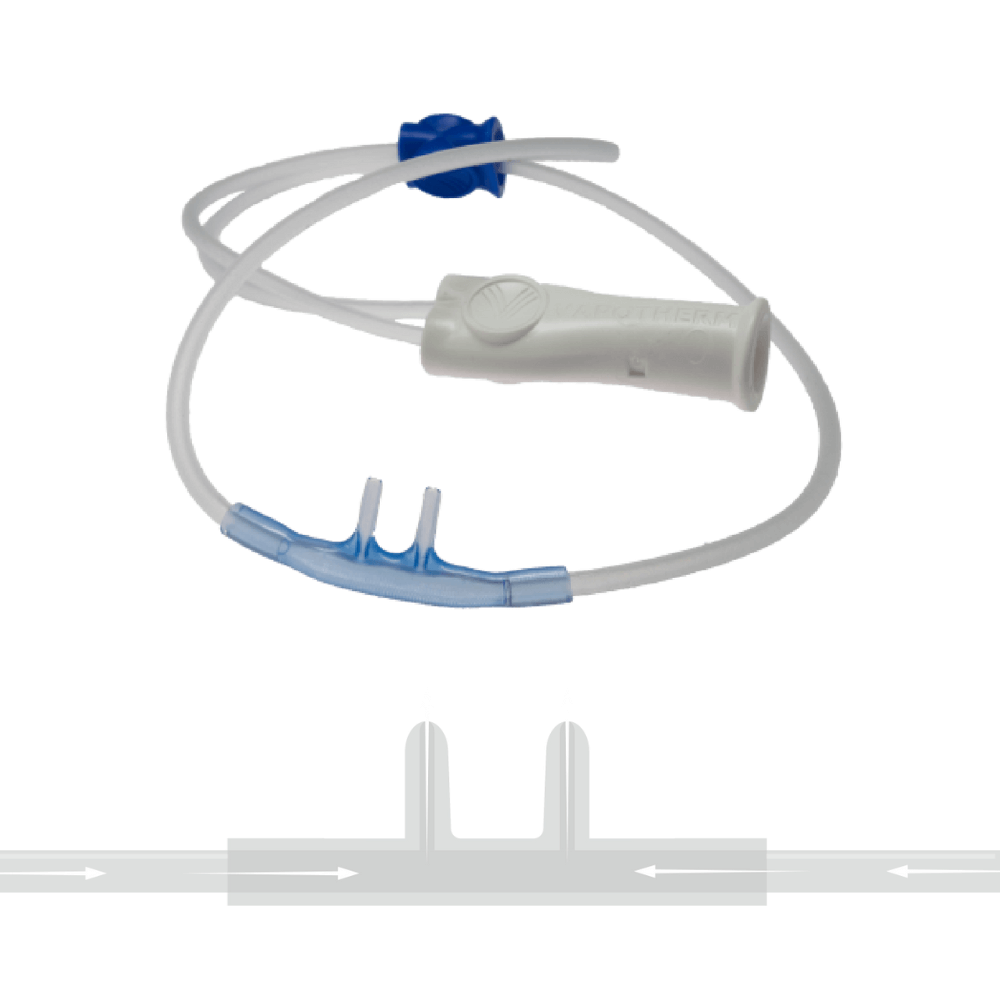
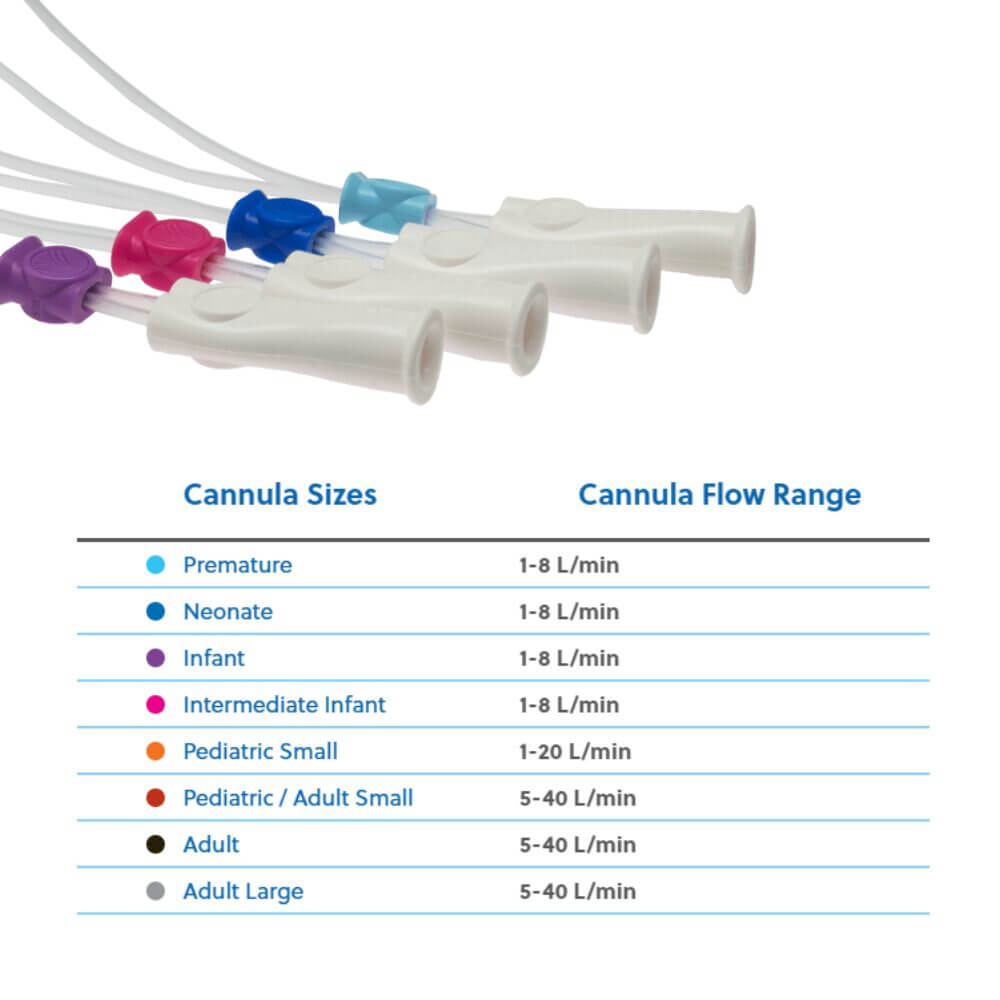
The narrow prong Vapotherm nasal cannula design maximizes flush of expiratory gas and assures an open system. It also is a design that is well suited for animal use.EFFECTIVE AND GENTLE RESPIRATORY SUPPORT FOR THE PATIENT
- Treat signs and symptoms of respiratory distress, including dyspnea, hypercapnia, and hypoxemia.
- Manage high acuity patients with less invasive and more comfortable respiratory therapy.
Water Jacket Delivery
The Vapotherm delivery tube uses the safe, insulating heat of warm water to maintain gas temperature and humidity all the way to the patient to mobilize secretions and maximize comfort. The triple lumen tube is designed to reduce rainout.CONFIDENCE AND EASE OF USE FOR THE CLINICIAN
- The system sets up ready to use in 5 minutes, requires minimal patient coaching, and staff intervention.
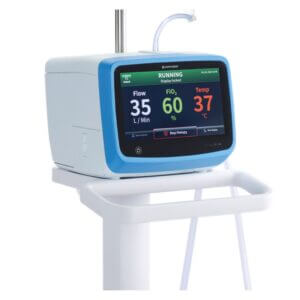
- Control of flow, FiO2, and temperature with the touch of a button.
- Designed to eliminate rainout for easy maintenance.
- Integrated alarms simplify patient safety.
Alarms & Alerts
The Precision Flow Hi-VNI incorporates a highly visual display of parameters and utilizes built-in alarms to let you know of any disruptions to the therapy. With Vapotherm, you have the confidence that you are delivering the therapy that you intend.Medical-Grade-Vapor™
The Vapotherm cartridge infuses the respiratory gas with energetically stable molecular vapor which reduces condensation, mobilizes secretions, protects respiratory tissue, and improves patient comfort.
Vapotherm Transfer Unit delivers Hi-VNI Technology on the go for easy patient ambulation and transfer.